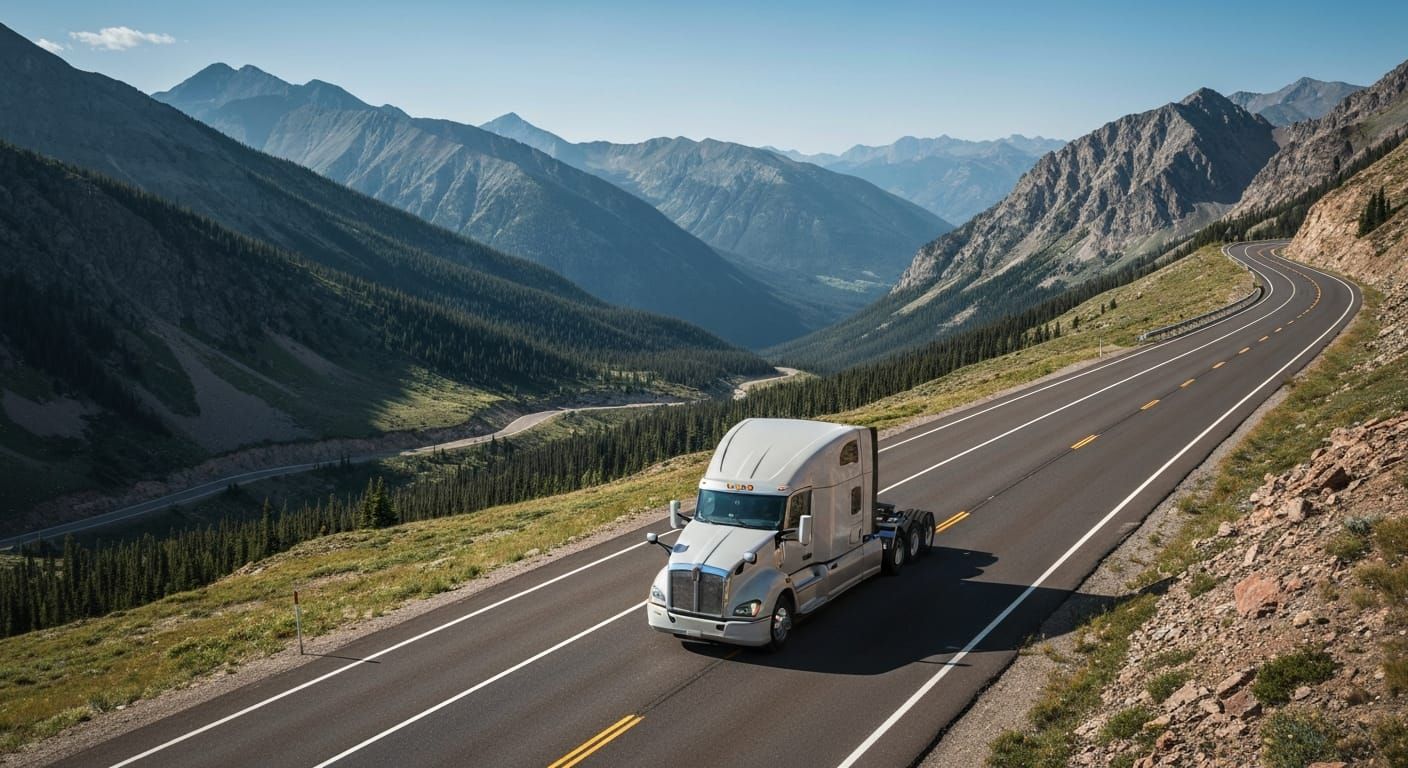
Operating Radius: The First Question Every Carrier Asks
When you apply for trucking insurance, one of the first questions is your operating radius. This single answer can swing your premium by 20–40%. Here’s how carriers classify it:
Local
0 – 50 Miles
Lowest premiums
City delivery, local hauling, dump trucks, construction. You stay in familiar territory with predictable traffic patterns. Fewer highway miles = fewer high-speed accidents.
Common operations: Sand/gravel, local delivery, waste hauling
Intermediate
50 – 200 Miles
Moderate premiums
Regional day trips, return-home-nightly runs. You know your routes, but you’re covering enough distance to encounter varied conditions. Some carriers classify this as “short-haul.”
Common operations: Regional LTL, agricultural, building materials
Regional
200 – 500 Miles
Above-average premiums
Multi-state runs with occasional overnight. More exposure to varied highway conditions, weather, and unfamiliar roads. Higher mileage = more time exposed to risk.
Common operations: Regional TL, reefer distribution, specialized
Long Haul / OTR
500+ Miles
Highest premiums
Coast-to-coast, cross-country. Maximum exposure: you drive through every weather zone, every traffic pattern, every jurisdiction. The most miles, the most time on the road, the most risk.
Common operations: Dry van OTR, flatbed nationwide, reefer cross-country
What Radius Actually Costs You
| Radius | Typical Annual Premium (New Authority) | vs. Local Baseline |
|---|---|---|
| Local (0–50 mi) | $8,000 – $14,000 | Baseline |
| Intermediate (50–200 mi) | $10,000 – $17,000 | +15–25% |
| Regional (200–500 mi) | $12,000 – $20,000 | +25–40% |
| Long Haul (500+ mi) | $14,000 – $25,000 | +35–60% |
Ranges reflect single-truck owner-operator with clean record. Your actual premium depends on many factors beyond radius.
Don’t lie about your radius. If you tell your carrier you run local (0–50 miles) but regularly take loads 300 miles away, you’re operating outside your rated radius. If you have an accident outside your declared zone, your claim could be denied and your policy voided. Always declare your actual maximum operating distance.
High-Risk Corridors: Where Accidents (and Premiums) Are Highest
Not all miles are created equal. Insurance carriers track accident frequency by corridor, and certain routes consistently produce more claims. If your operation runs through these areas regularly, your rates reflect it.
I-95 Corridor (East Coast)
VERY HIGH RISK
Maine to Florida — the busiest freight corridor in America. DC-to-NYC stretch is the most congested and highest-accident segment. Stop-and-go traffic, aggressive passenger car drivers, narrow lanes through metro areas.
Accident rate 40–60% higher than national average on I-95 through NJ/NY/CT
I-10 Corridor (Southern)
HIGH RISK
Jacksonville to Los Angeles. The southern cross-country route hits Houston (one of the most dangerous metro areas for trucks), plus extreme heat in Arizona/New Mexico (tire blowouts, brake fade) and hurricane exposure along the Gulf.
Houston metro has the highest truck-involved fatality rate of any US metro area
I-80/I-90 Northern Corridor
HIGH RISK
New York to San Francisco via Chicago. Lake effect snow, whiteout conditions in winter, Chicago metro congestion year-round. The I-80 Wyoming stretch is notorious for wind closures — 65+ mph gusts that tip trailers.
Wyoming I-80 sees 50+ wind-related truck crashes per year
I-5 West Coast
MODERATE-HIGH RISK
San Diego to Seattle. The Grapevine (Tejon Pass, CA) and Siskiyou Pass (OR) are steep mountain grades. Los Angeles metro is high-congestion. Seattle-to-Portland stretch has persistent rain and limited visibility.
Grapevine grade accounts for 200+ truck incidents per year
I-40 Cross-Country
MODERATE RISK
Wilmington, NC to Barstow, CA. Generally lower traffic density than I-10 or I-80, but extreme heat through the desert Southwest and mountain grades through Tennessee/North Carolina.
Generally considered the safest cross-country route for trucks
Garaging Location: Where You Park Matters
Your “garaging location” — where your truck is principally stored when not in use — is a major rating factor. This determines your base jurisdiction for insurance rating purposes.
State Matters
Each state has different minimum insurance requirements, legal environments, and claim frequencies. Some states are dramatically more expensive than others for the same operation:
New York, New Jersey, Florida Highest-cost garaging states
California, Texas, Michigan High-cost garaging states
Georgia, Pennsylvania, Illinois Moderate-cost states
Idaho, Montana, Iowa, Nebraska Lower-cost garaging states
Urban vs Rural
A truck garaged in downtown Houston costs significantly more to insure than the same truck garaged in rural Texas. More traffic, more accidents, more theft, more expensive claims.
Urban vs rural premium difference: 15–35% higher for urban garaging
Zip Code Specificity
Carriers rate down to the zip code level. Two addresses in the same city can have different rates based on claim history in that specific zip code. High-crime areas add theft surcharges. Flood-prone areas add comprehensive costs.
Can You Change Your Garaging Location to Save Money?
You must use your actual garaging address — fraud here is easy to detect and voids your policy. However, if you legitimately have options (home address vs. terminal, or if you’re relocating), this is worth considering. Moving from a high-cost urban zip code to a lower-cost rural location can save $1,000–$3,000/year on the same policy.
State-Specific Insurance Factors
Beyond garaging, certain states create additional insurance costs when you operate through them:
No-Fault States
Florida, Michigan, New York, and 9 other states have no-fault insurance laws. In these states, each party’s own insurance pays regardless of who caused the accident. This increases costs because your policy pays your own claims even when you’re not at fault.
FL, MI, NY, NJ, PA (limited), MA, MN, KS, KY (choice), ND, UT, HI
Nuclear Verdict States
Some states consistently produce extremely high jury awards in trucking accident cases. If you operate in these states, carriers factor that liability exposure into your premium.
TX, FL, CA, GA, IL, NY, NJ, PA — trucking verdicts frequently exceed $10M
High Uninsured Motorist States
States with high rates of uninsured drivers mean more claims against YOUR policy when an uninsured car hits your truck. Florida (20%+ uninsured rate), Mississippi, New Mexico, and Michigan are worst.
States With Higher Filing Requirements
Some states require higher minimum liability limits for trucks operating within their borders, beyond the federal $750,000 minimum. California requires $1M for certain operations. If you regularly operate in these states, your policy must cover the highest applicable limit.
6 Route Decisions That Lower Your Insurance Costs
You can’t always control where freight goes, but you can make decisions that reduce your risk profile over time:
1
Declare an Honest — But Tight — Radius
If 90% of your loads are within 200 miles, declare intermediate radius and decline the occasional 400-mile load. The premium savings from a lower radius classification often exceeds the revenue from occasional long-haul loads.
Potential savings: 15–25% on liability premium
2
Avoid High-Risk States When Possible
If you have a choice between running through Texas (nuclear verdict state) or New Mexico (lower risk), the NM route may save you money long-term — especially if you ever have a claim. Some carriers specifically ask which states you operate in.
Potential savings: Varies, but reduces worst-case claim exposure
3
Run Predictable, Consistent Routes
Carriers prefer consistency. A trucker who runs the same 3 lanes every week is more predictable (lower risk) than one who takes random loads nationwide. Dedicated lanes also mean you know the road — weather patterns, traffic, construction, truck stops.
Potential savings: 5–10% after 1–2 years of consistent routing
4
Time Your Driving Wisely
Night driving has 3x the fatality rate of daytime driving. Dawn and dusk (deer season, sun glare) are also high-risk. While insurance doesn’t rate time-of-day directly, your accident record does — and most preventable accidents happen at high-risk times.
Potential savings: Indirect — fewer accidents = lower premiums at renewal
5
Consider Your Garaging Location
If you’re choosing where to base your operation, insurance is a real factor. The same truck, same driver, same authority in Idaho vs. Florida can see a $3,000–$8,000 annual premium difference. Rural garaging is almost always cheaper than urban.
Potential savings: $1,000–$8,000/year depending on move
6
Build a Clean Record on Known Routes
Your first 2 years of authority are the most expensive. Running safe, predictable routes during this period builds the loss history that gets you access to better carriers and lower rates at year 3+. Don’t take risky, unfamiliar runs during your new-authority period.
Potential savings: 30–50% lower premiums by year 3 with clean record
5 Routing Mistakes That Cost You on Insurance
1. Declaring a wider radius “just in case”
If you run 95% local but declare long-haul “just in case” a good load comes up, you’re paying long-haul rates on every mile. Declare your actual operation. If a one-time opportunity comes up, call your agent — they may be able to add temporary extended coverage for much less than a permanent radius increase.
2. Operating outside your declared radius without telling your insurer
If your policy says 200-mile radius and you’re running 500-mile loads regularly, you have a coverage gap. If you have a claim outside your declared zone, your carrier can deny it. Always update your policy when your operation changes.
3. Ignoring state-specific requirements
Each state may have unique insurance requirements for trucks operating within its borders. California, Texas, and New York all have requirements above federal minimums for certain operations. Running in a state you’re not properly covered for creates liability exposure.
4. Not considering insurance when pricing lanes
A high-paying load through a nuclear verdict state may actually be less profitable than a moderate-paying load on a lower-risk route — especially if you end up with a claim. Factor insurance exposure into your per-mile profitability, not just rate and fuel.
5. Changing operations without updating your policy
Started local, now running regional? Added a new state to your territory? Changed garaging address? Every operational change should trigger a call to your agent. Policies are rated on declared operations — undeclared changes create coverage gaps.
Frequently Asked Questions
Can I change my radius mid-policy?
Yes — call your agent. Most carriers allow mid-term radius changes. If you increase your radius, expect a premium increase pro-rated for the remaining policy term. If you decrease, you may get a small credit, though some carriers don’t refund for radius decreases mid-term.
Do insurance companies track my actual routes?
Not in real-time (usually), but ELD data and fuel receipts can be subpoenaed after a claim. If your ELD shows you regularly operating 400 miles from your base when your policy says 200-mile radius, your claim could be denied. Some newer carriers are starting to offer telematics-based rating that does consider actual routing.
Does running through Canada or Mexico affect my insurance?
Yes, significantly. US policies typically do NOT cover operations in Mexico — you need a separate Mexican policy. Canada coverage is available as an endorsement but adds cost. If you’re crossing borders regularly, make sure your policy explicitly covers it. A claim in a country you’re not covered for is entirely out of pocket.
What’s the cheapest state to garage a truck?
Generally, rural areas in low-population-density states: Idaho, Montana, Wyoming, Iowa, Nebraska, the Dakotas. But “cheapest” only matters if you actually live and operate there. You can’t fake a garaging address — carriers verify it, and fraudulent garaging is grounds for policy cancellation and claim denial.
If I only cross into a high-cost state occasionally, does it affect my rate?
It depends on how “occasionally” and which state. If you cross into New York once a month to deliver, most carriers will factor that in. If you literally go once a year, it may not matter. Be honest on your application about states you operate in — let the carrier decide how to rate it rather than hiding it and risking a coverage gap.
Related Guides
Why Is My Quote So High? Every factor that drives your premium Insurance Renewal Guide 90-day timeline and savings strategies Cost Per Mile Calculator Factor insurance into your real operating costs Seasonal Trucking Tips Weather hazards that vary by route and season
Get a Quote Based on Your Actual Operation
Your routes, your radius, your garaging location — we price based on who you actually are, not a one-size-fits-all estimate. Talk to an agent who knows the difference between a local dump truck and a coast-to-coast reefer.